
The book had been laying on the small table in the living room for weeks. My original copy of Pearl S. Buck’s “The Good Earth,” the paperback was quite small, almost tiny compared to the trade paperbacks that make up most of my current-day reading.

My original copy of “The Good Earth,” the classic novel by Nobel Prize-winning author Pearl S. Buck.
I had recently re-read the tale of the Chinese farmer, Wang Lung, and the life he built by working the land. But the book I read this time was a much newer copy, one that I had picked up last fall at the YWCA of Hanover‘s annual used-book sale. It was bigger, easier to hold and to read.
And now, the old copy still lay there, waiting for me to decide what to do with it. I could donate it to the next YWCA sale, I thought. But who would buy that old thing? Sent off to the sale, it would probably end up being one of the leftovers sent to the landfill. Bad enough — in some people’s eyes — that it was “paper” and not a digital copy. But it was also a very small paperback, with tiny type and yellowed pages, of a quality that would rival newsprint in its texture. A cheap little book, it was.
And yet, somehow, the idea of throwing such a classic in the trash can didn’t seem right, either.
As I stood there flipping through the pages, I suddenly remembered another book I once read: “Compost This Book.” The title says it all. The book, written by Thomas Christopher and Marty Asher, is all about backyard composting. It ends with an order to get even more use out of the book by adding it to your compost pile and turning it into fertilizer. I haven’t composted Christopher and Asher’s book because I still consult it once in a while, but I liked the idea.
Really, what would be more appropriate for an old and tattered copy of “The Good Earth” than to turn it into good earth?
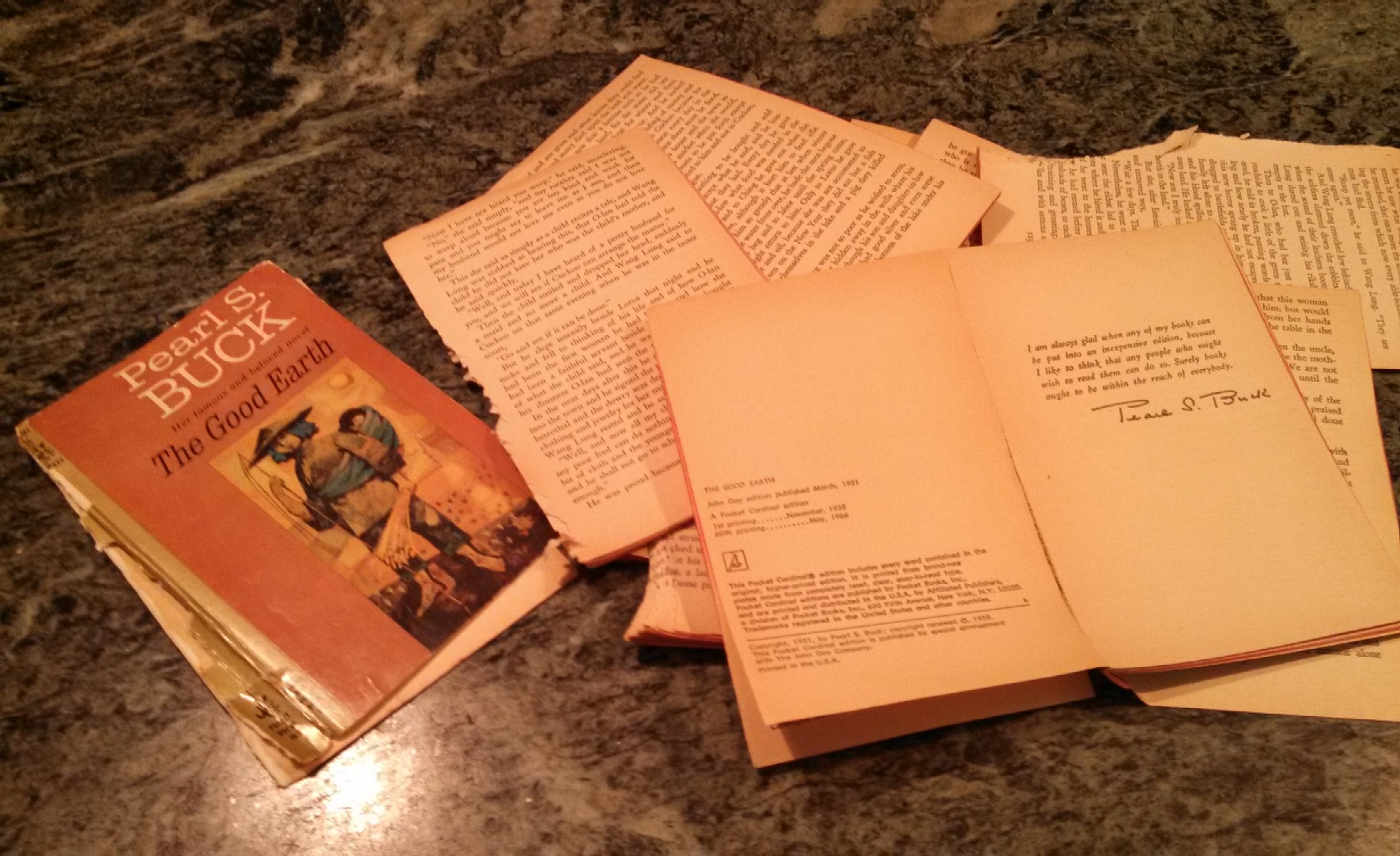 It wasn’t tough at all tearing the book apart. The binding glue was so old and dry that the cover came off easily. Then, I removed the pages in clumps.
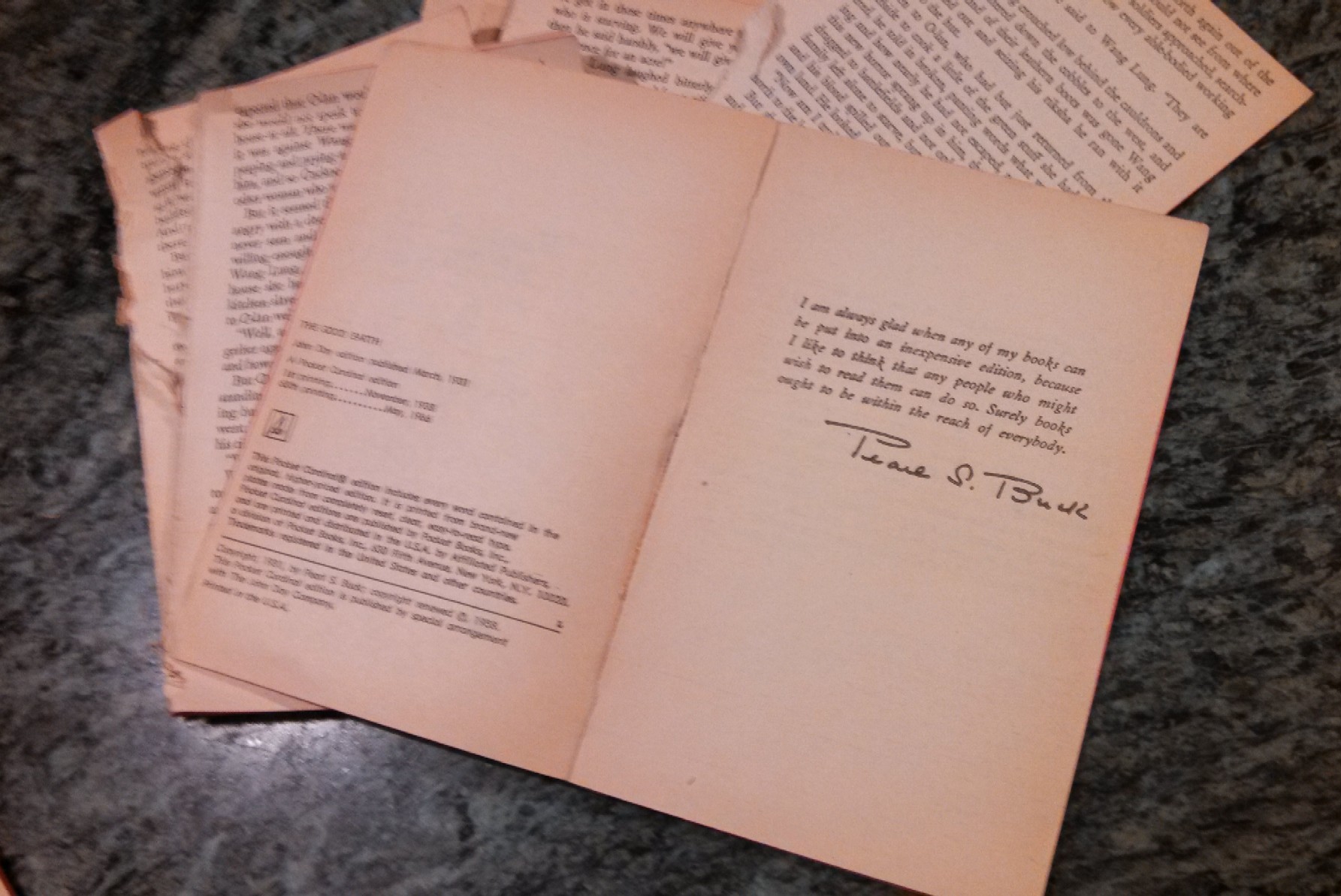 The bookplate told me this little paperback edition had been made in May 1966, the 60th printing of the novel first published in 1931.
With all the pages removed, off to the shredder I went.
Even though this was the first time I would actually be returning a book to the earth, it’s nothing new for me to add shredded paper to my compost pile. When I shred personal documents or junk mail, that’s where the shreds go.

Here are the yellowed shreds of pages, all ready for the compost pile.
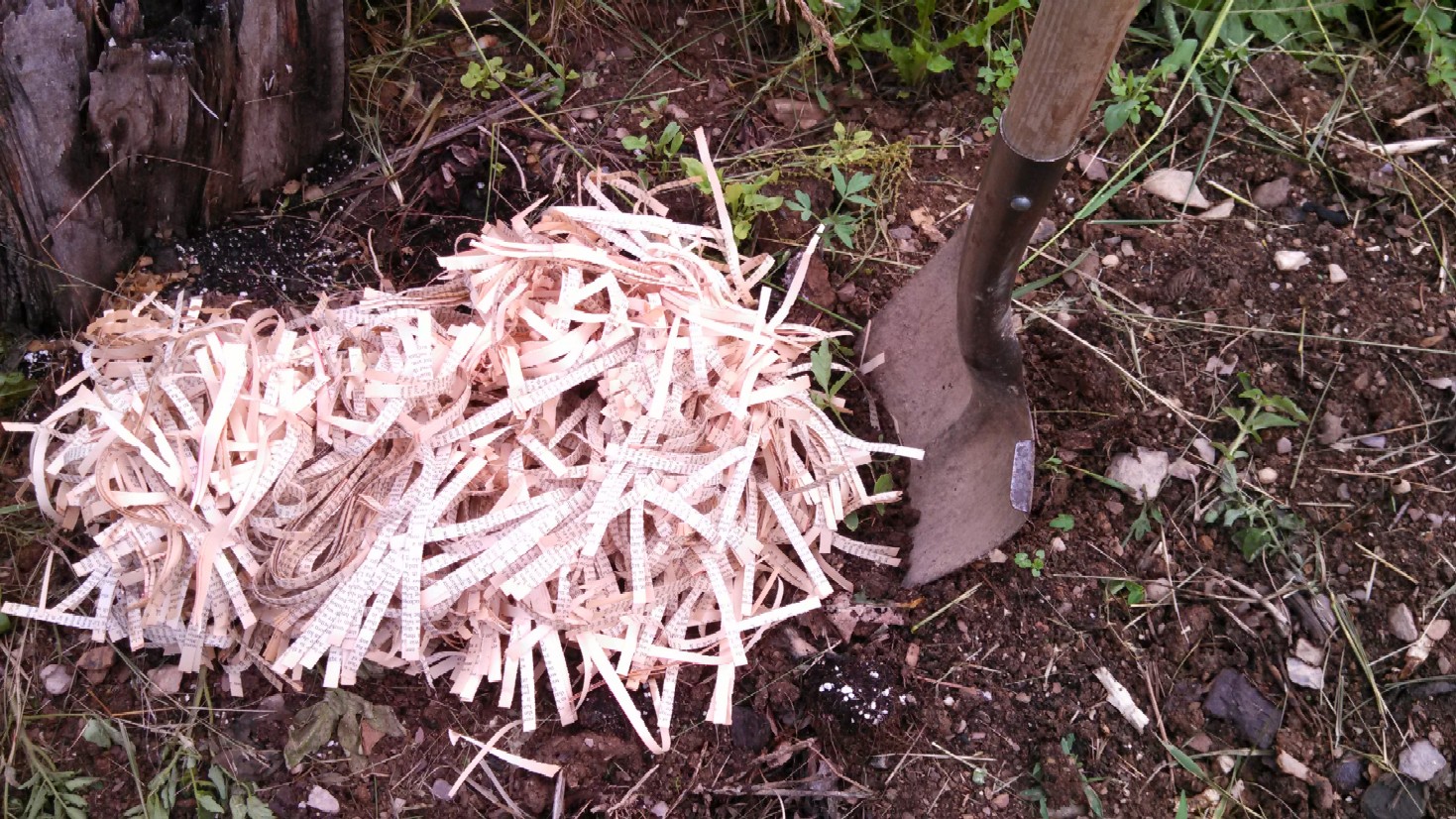
I dumped the shreds onto the compost pile in the corner of my garden.
And below, the page shreds are covered with enough soil to keep them from blowing away.
 Here’s a good place to learn the basics of composting, from the Pennsylvania Department of Environmental Protection.
I don’t know if I’ll be composting more books in the future. I’d rather they go to a good home. But this seemed like a particularly fitting use for “The Good Earth” — that it would go back to the earth, and eventually nourish the garden soil that grows my vegetables.
 Wandarings